 دار بيبليون

Lwiis Saliba, Introducing Ayurveda at the Indian Embassy, Beirut, Wednesday, September 23, 2026
My Master in India always advised me: teach Ayurveda and yoga in your mother tongue, for without it this sublime knowledge will not take root in your country or in the Arab world. Many of those present here have also asked me to speak in Arabic, so in accordance with these requests, my presentation will be in two parts: the first in English, and the second in Arabic.
Since the beginning of this third millennium, in 2000, I embarked on an ambitious project to introduce Ayurveda to Lebanon and the Arab world. This was achieved through lectures, television interviews, bringing Ayurvedic doctors from India, and writing and publishing a series of books on Ayurveda. Today, I will briefly mention some of the books I have written that have become widely available throughout the Arab world to introduce Ayurveda.
The Ayurveda and Yoga series now comprises ten books, the first and most famous of which is:
1-The Encyclopedia of Ayurveda: A Scientific Study and Practical Guide to Healing and Wellness. This unique encyclopedia, published in 2006, is now in its fifth edition and contains 675 pages.
2-Ayurveda and Arabic Medicine: A Study of Indian Medicine and its Influence in the Islamic World, with an Investigation and Commentary on “An Article from the Compendium of Indian medicine Books” by Ibn Rabban al-Tabari, 371 pages.
I will not discuss the other titles in this series, but will only provide a brief overview of the last book published within it.
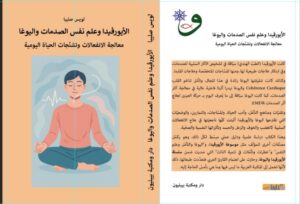
“Ayurveda, Trauma Psychology, and Yoga: Treating Emotional Distress and Tensions of Daily Life”
Ayurveda and Yoga were precursors to what is known today as trauma psychology. This is one of the latest discoveries and developments in the field of psychology. Ibn Rabban al-Tabari (153-247 AH/770-861 CE) quotes Ayurvedic sources stating that among the most prominent causes of ailments and diseases are: “psychological disorders such as sadness and anger, or fatigue, or enduring traumas and horrors.” The last sentence is truly remarkable and key, demonstrating how insightful and perceptive Ayurvedic sages and physicians were regarding the impact of trauma and its role in causing psychological and physical illnesses. This is something that modern medicine and contemporary psychology have only recently come to understand!
Ibn Rabban al-Tabari’s text also points to the active psychological influence in causing illness, which is now known as psychosomatic medicine. Regarding the crucial role of tension and negative emotions in causing disease, Dr. David Sarvan-Schreiber says: “Psychological stress is the catalyst for between 50 and 70% of all medical consultations, and a more significant risk factor for mortality than smoking.”
Based on my experience with Ayurveda and yoga, I’ve observed that most people shy away from self-improvement. They seek solutions to their problems along the lines of: “Take this pill morning and night, and you’ll find the solution!” As for natural solutions that require changes to their lifestyle, diet, eating habits, and so on, they dismiss them, believing they demand effort that they find tiring and confusing. Meanwhile, Sufis teach and reiterate the saying of Abu Ali al-Daqqaq (d. 405 AH): “He who adorns his outward appearance with striving, God will adorn his inner self with vision.”
These people fail to grasp that any illness or psychological or physiological problem first and foremost indicates an underlying issue that must be corrected!
Who among us would dare drive or ride in a car with faulty brakes?
Everyone is aware of this deadly danger and avoids it. Yet, as this book demonstrates, most people disable the body’s and mind’s brakes—the parasympathetic nervous system—and consequently become incapable of controlling their emotions such as anger, fear, and sadness. They allow these emotions to dominate and control them, causing suffering and illness, all the while remaining oblivious to the root cause! The vast majority of people are unconcerned with understanding how their minds work to alleviate their suffering, or they avoid self-knowledge. This avoidance, evasion, or shirking is, in fact, a form of disguised suicide. As the Indian sage Ma Ananda Mayi (1896-1982) said:
“Those who do not seek to know themselves commit suicide every moment.”
Marma as an Applied Model in Ayurveda and Trauma Psychology
Ayurveda defines marma as an anatomical point where muscles, veins, arteries, tendons, and bones converge to form the life centers. It is a point for the exchange and flow of energy in the body.
Marma therapy is an important branch of Ayurvedic and Tibetan medicine. It involves reopening and revitalizing these points, thereby improving both mental and physical health. Today, with the emergence and development of trauma psychology, Marma and its treatments are gaining a new dimension, particularly in the psychological and physical therapy of trauma-related effects, demonstrating that Ayurveda was a pioneer in this field.
The Three Major Marma Points:
Since marma points are not only on the surface (of the skin) but penetrate deep into the body, they can be stimulated through meditation, such as observing the breath. Meditation specifically activates the three major marma points (Tri Maha Marma), located in the head, heart area, and lower abdomen. These points are the most prominent among the marmas and should be the first to be activated, as they exert a significant influence on the minor marma points.
These three points can be focused on and massaged during daily self-massage.
1-The first point is between the eyebrows in the center of the forehead. Gently massaging this area with the eyes closed is beneficial for anxiety, headaches, and other Vata disorders affecting the upper body.
2-The second point: in the heart area. It is located directly below the sternum (the bone where the ribs protrude), and where the rib cage ends. Massaging this point helps to calm emotions.
3-The third point: in the lower abdomen (10 cm below the navel). Massaging this point is beneficial for constipation, gas, and other air-related temperament problems affecting the lower part of the body. This third Marma point likely corresponds to the Hara, which the Japanese focus on.
Marma can generally be used by massaging the feet. There are several of these points, the most prominent being on the soles of the feet. To activate them, a gentle five-minute foot massage daily is recommended. The most suitable time for this is
For massage, it is best done right before bed. The calming effect it has on the nervous system, especially in an airy temperament, makes it the most effective preparation for deep sleep.
Marma therapy offers a calm and simple way to self-program and organize our plans in a private atmosphere.
As a general rule, these Marma therapy exercises should be synchronized with breathing. Applying pressure with your finger(s) should coincide with inhalation, and releasing the fingers should be accompanied by exhalation.
Let’s begin with self-programming. On the right forearm, four finger-widths from the wrist, lies the Marma point for self-programming. Close your eyes and press this point three times with your thumb, internally repeating with each press an intention or goal you are programming yourself to accomplish, such as: “I will do this specific task today.”
Inhale when you press, and exhale when you release the pressure. Next, with your eyes closed, apply pressure to the Marma point at the base of your nose, between your nostrils. Repeat this pressure with your index finger three times. This Marma point improves the body’s energy level and helps strengthen focus and alertness. Inhale when you press and exhale when you release the pressure. You can repeat this pressure about five times.
Marma: Stimulating Vision and Relaxing the Eyes
Next, we move to the Marma points around the eyes. The main purpose of this practice is to stimulate vision and relax the eyes. There are five Marma points around each eye. Simultaneously press the two parallel points on each of the right and left eyes with your index finger. The first point is where the center of the eye meets the nostril, the second is below the eye near the nose, the third is below the eye on the opposite side of the nose, the fourth is in the center of the eye on the opposite side of the nose, and the fifth is below the forehead at the outer edge of each eyebrow.
After applying pressure to the five Marma points around the eyes, gently massage your forehead in a horizontal motion and around your eyes in a motion along the eyelids.