 دار بيبليون

Lwiis Saliba: The Scholar Who Crossed Religions in Search of the Human, by Farouk Ghanem Khaddaj
A Reading of an Academic Project Between Comparative Method and Lived Religious Experience
In the contemporary Arab intellectual landscape, Lwiis Saliba emerges as a distinctive figure—not merely as a comparative religionist, but as a phenomenological cartographer of the sacred. His project transcends the classical descriptive-comparative model, venturing instead toward an existential hermeneutics that treats religion as a living, breathing human event rather than a closed corpus of dogmatic texts. This intellectual trajectory is rooted in a methodological wager: to understand religious phenomena from within their symbolic and experiential constitution, prior to any external categorisation or a priori judgement.
A Multi-Rooted Academic Formation: Between Jbeil/Byblos, Paris, and Rishikesh
Born in Jbeil (Byblos), Lebanon, Saliba completed his early education there before obtaining the French Baccalaureate in Mathematics and Sciences with distinction. His academic record reveals a deliberate polyglotism: he earned two degrees from the Lebanese University—in Arabic Language and Literature and in Social Sciences (1984)—followed by a degree in Documentation and Information (1985), and postgraduate studies in Arabic (1988). This early immersion in both the humanities and information sciences prefigured his later interdisciplinary approach.
His intellectual maturation, however, crystallised during approximately twelve years in France. At the Sorbonne University, he achieved his study in 2005 with an academic work on The Mystical Experience of Abu Yazid al-Bistami—a study that placed Islamic Sufism within the broader horizon of global contemplative traditions. Earlier, in 2001, he defend another thesis at the University of Hyderabad on The Earliest Texts of Vedic Revelation: Rig Veda, Study, Translation, and Commentary, reflecting an early commitment to bridging the Indo-Islamic spiritual heritage.
Yet Saliba’s formation was not confined to institutional walls. He spent nearly three years in India, engaging directly with living traditions: practising Hatha Yoga and Advaita Vedanta at the Sivananda Ashram in Rishikesh, studying Buddhist philosophy in Dharamsala, and immersing himself in Sikh devotional practices at the Golden Temple in Amritsar. Complementarily, he studied classical Islamic sciences at Al-Azhar and acquired Syriac and Latin alongside his Sanskrit training in Varanasi. This fusion of academic rigour and lived religious experience constitutes the bedrock of his distinctive scholarly profile.
A Methodological Anchor: “Understanding from Within” as a Phenomenological Imperative
Saliba’s intellectual project rests on a central methodological axiom: religions are not systems to be compared from an external vantage point but human experiences that demand empathetic description according to their own internal logic. This place his work within the broader phenomenological tradition associated with Mircea Eliade and Wilfred Cantwell Smith while preserving a distinctly cross-cultural orientation.
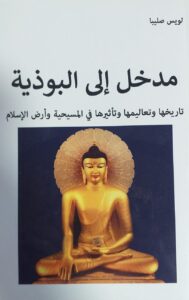
For Saliba, Islamic mysticism (Sufism) is not a subsidiary branch of jurisprudence but an existential and cognitive horizon that transcends doctrinal boundaries. Likewise, he approaches Hinduism, Buddhism, and Sikhism not as exotic artefacts but as coherent spiritual worlds whose meanings emerge most clearly from within their own traditions.
His reading of Al-Biruni’s Kitab al-Hind, for example, highlights how the medieval Muslim scholar sought to understand Hindu cosmology through its own conceptual framework rather than through theological polemics. Saliba presents this as an enduring methodological lesson for contemporary comparative religion.
He encapsulates his scholarly orientation in a succinct statement:
«”In the study of religions, I seek to understand, not to judge.”»
Rather than suggesting an uncritical relativism, this approach prioritises understanding before evaluation, allowing religious traditions to be encountered on their own terms before being subjected to comparative analysis.
A Prolific and Multi-Disciplinary Intellectual Production
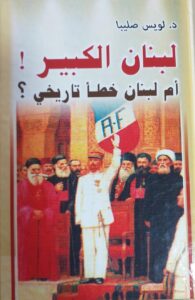
According to his published bibliography, Saliba has authored approximately ninety books spanning Sufism, Indian thought, comparative religion, Lebanese history, and Islamic-Christian studies.
Among his notable works are:
– Encyclopedia of Ayurveda
– Hinduism and Its Influence on Islamic Thought According to Al-Biruni
– The Nestorians and Islam
– The Mi’raj in Popular Consciousness
– Kamal Jumblatt the Yogi
The latter is especially noteworthy for interpreting Kamal Jumblatt through a spiritual and contemplative perspective rather than exclusively through his political legacy, offering an alternative reading of his intellectual development.
Most of these works have been published through Byblion Editions in Byblos, a publishing house that has played an important role in disseminating scholarship on comparative religion.
Academic Activity and International Engagement
Saliba has delivered lectures and participated in conferences across Lebanon, France, India, the Netherlands, and Iran.
He served as a lecturer, research director, and doctoral supervisor at the Jesuit University of Beirut, where his academic work continues to contribute to the development of comparative religious studies.
A Critical Reading: Between Empathy and Critical Distance
Saliba’s phenomenological orientation raises a fundamental methodological question that has long occupied scholars of religion: how can one combine empathetic understanding with critical distance?
His work consistently favours approaching religious traditions from within before moving toward comparative interpretation. While this offers considerable insight into lived religious experience, it also requires continual methodological vigilance to ensure that scholarly analysis remains analytically rigorous.
The significance of Saliba’s contribution lies precisely in his engagement with one of the enduring debates in modern religious studies: the dynamic relationship between description and interpretation, participation and observation, historical inquiry and existential understanding.
His work may therefore be read alongside broader conversations within contemporary Arab religious thought concerning the relationship between textual analysis, historical criticism, and lived spirituality.—
Conclusion: Toward a Renewed Vision of Religious Studies
From Jbeil to Paris, from Rishikesh to Benares, Lwiis Saliba has developed an intellectual trajectory that combines multidisciplinary academic formation with extensive first-hand engagement with diverse religious traditions.
His scholarship invites readers to reconsider religion as a plural and profoundly human experience—one that deserves to be understood from within before being examined through comparative analysis.
In doing so, his work contributes to an ongoing conversation about the future of religious studies in the Arab world, suggesting that rigorous scholarship and genuine openness to religious experience need not stand in opposition. Instead, they may together provide a richer framework for understanding humanity’s diverse spiritual traditions.
Farouk Ghanem Khaddaj, June 26, 2026

Lebanese Writer and Researcher in Literature and Human Thought