 دار بيبليون

Buddhism in Arabic: Lwiis Saliba Opens Two Windows onto the Buddha’s World/By Farouk Ghanem Khaddaj, 12/6/2026
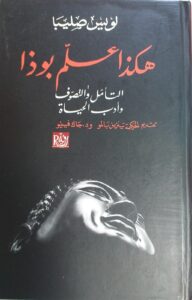
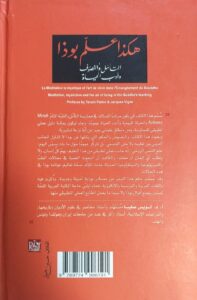
What does the Buddha sound like in Arabic? In two thoughtful and illuminating books, Dr. Lwiis Saliba offers an answer—inviting readers into one of humanity’s most enduring spiritual traditions through the twin lenses of history and contemplation.
The books are Thus Taught the Buddha: Meditation, Mysticism, and the Art of Living (Ru’ya Publishing, Cairo, 2025) and An Introduction to Buddhism: Its History, Teachings, and Influence on Christianity and the Islamic World (Byblion Publishing House, Byblos/Lebanon, 2024). Together, they seek to introduce Buddhism to Arab readers beyond the familiar frameworks of Orientalism and superficial comparison, striving instead to understand it from within its own intellectual and spiritual universe.
This project forms part of Saliba’s broader scholarly endeavor. A professor of Religious Studies and Islamic Studies, Lwiis Saliba also serves as Director of Research at the Faculty of Religious Sciences. Throughout his academic career, he has devoted considerable attention to the comparative study of religions, mysticism, and religious thought. His work continues a long-standing effort to foster a deeper Arab engagement with the spiritual traditions of Asia through rigorous scholarship and cultural sensitivity.
Buddhism from Within: History and Thought
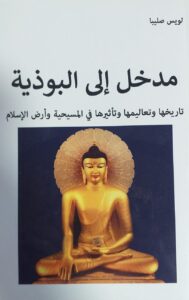
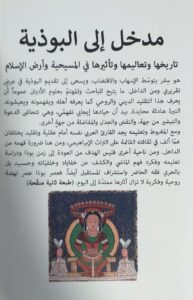
An Introduction to Buddhism belongs primarily to the field of historical and analytical religious studies. At its core lies a clear methodological choice: understanding a tradition through its own categories and self-understanding rather than through external assumptions.
Saliba describes the book as a balanced journey between brevity and detail, one that seeks to present Buddhism “from within,” enabling readers to encounter the tradition as its adherents have understood and lived it throughout history.
In this sense, Buddhism emerges not as an exotic Eastern curiosity but as a profound intellectual and spiritual tradition whose influence has extended across civilizations and continues to shape global thought today.
The narrative begins with the life of Prince Gautama, whose confrontation with sickness, old age, and death set him on the path toward enlightenment. From this transformative experience emerged the Four Noble Truths and the Noble Eightfold Path, teachings that remain central to Buddhist thought.
Yet the significance of the book extends beyond historical narration. One of its strengths lies in its awareness of the challenges involved in translating Buddhist concepts into Arabic intellectual contexts. Saliba approaches terms such as Anatta—commonly translated as “non-self”—with nuance, explaining it as the absence of a permanent, unchanging self rather than a negation of human existence. His discussion highlights the complexity of conveying such ideas across distinct philosophical and theological traditions.

Farouk Khaddaj
Meditation Between Wisdom and Science
While the first book focuses on history and doctrine, Thus Taught the Buddha turns toward the practical and contemplative dimensions of Buddhist wisdom. Here, Saliba explores meditation not only as a spiritual discipline but also in relation to contemporary research in psychology and behavioral medicine.
One chapter raises a direct question: Can meditation contribute to physical well-being? Drawing on various studies, Saliba reviews research suggesting that meditation may influence the release of endorphins and oxytocin, hormones associated with relaxation, emotional balance, and overall well-being.
He also discusses findings from studies that suggest, according to some preliminary research, increased activity in certain immune responses and improved reactions to some vaccines among individuals who practice meditation regularly. These observations are situated within broader research on stress reduction and psychosomatic health.
Particular attention is given to the work of Harvard physician Herbert Benson, known for his pioneering research on the “relaxation response,” which explores the physiological effects of meditative practices and their role in reducing stress-related symptoms.
What distinguishes Saliba’s approach, however, is his intellectual restraint. He does not present meditation as a miraculous cure or a substitute for medical treatment. Instead, he portrays it as a supportive practice capable of enhancing quality of life when integrated responsibly into a broader framework of health and well-being. This measured perspective lends credibility to the work and protects it from the exaggerated claims often associated with contemporary spiritual trends.
The book also references studies involving individuals living with conditions such as multiple sclerosis, breast cancer, and chronic pain, emphasizing improvements in quality of life rather than therapeutic certainty.
At a more personal level, Saliba remarks that the process of writing the book brought him “a profound sense of inner peace and serenity,” expressing the hope that readers might discover something similar in its pages. This statement reveals the dual nature of the work: it is both an academic study and a deeply human intellectual journey.
Between Knowledge and Contemplation
Ultimately, the significance of these two books lies in the questions they raise about the human condition itself. In an age marked by anxiety, distraction, and relentless acceleration, they invite readers to reflect on the relationship between inner awareness and external knowledge, between intellectual understanding and lived experience.
The two volumes converge around a central insight: human beings cannot be understood solely from the outside. One must also explore the interior landscape of consciousness and meaning. The first book approaches Buddhism as history and thought; the second approaches it as a practice of awareness and contemplation. Together, they offer Arab readers an opportunity to engage with a spiritual tradition that extends beyond doctrine and ritual toward a deeper inquiry into the nature of the self and the search for meaning.
Seen in this light, Saliba’s project is more than a presentation of two books. It is an invitation to revisit a timeless question: how can we understand ourselves in a world where anxiety outpaces understanding?
Farouk Ghanem Khaddaj is a Lebanese writer and researcher in literature and humanistic thought.